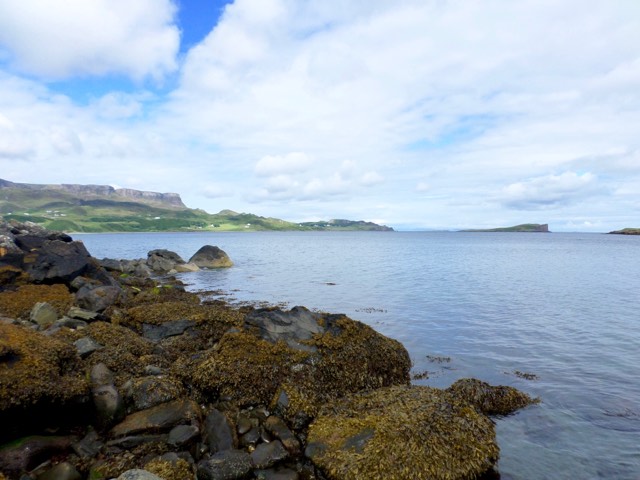
The Isle of Skye is the largest island in the Inner Hebrides in Scotland.
THE OLD MAN OF STORR
The Old Man of Storr is a large rock that stands high on a hill on the Trotternish peninsula. Along with the ridge on the hills, the Old Man of Storr was created by a giant landslide in ancient times and is made from Basalt and Gyrolite. The landslide was the largest in the UK, covering 8.5 square kilometers. It was caused when the hills and cliffs split apart and slid down towards the east. The Old Man stands at 50 meters tall on a hill that is 719 meters high. The Old Man is probably the best recognised landmark on the Isle of Skye and the hill is a very popular walk, with the return walk taking around 90 mins. The Old Man of Storr was used for opening scenes of the film Prometheus from 2012.
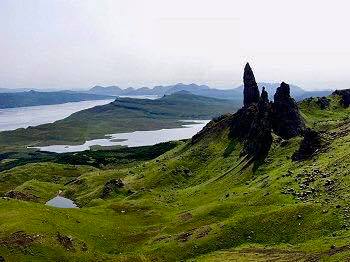
There are a couple of well known legends relating to the Old Man of Storr.
The first being that there was a giant that lived in the Trotternish Ridge, and his thumb was left sticking out of the ground when he was burried, creating the large rock known as the Old Man. The word ‘Storr’ in Norse for ‘Great Man’.
Another legend tells of a Brownie, which is a type of Scottish Fairy who helps out families. One local man saved the life of a brownie and they became lifelong friends. When the man’s wife passed away, he died shortly afterwards of a broken heart. The brownie was extremly upset, and chiselled in the ridge in memory of the man and his wife.
THE QUIRAING
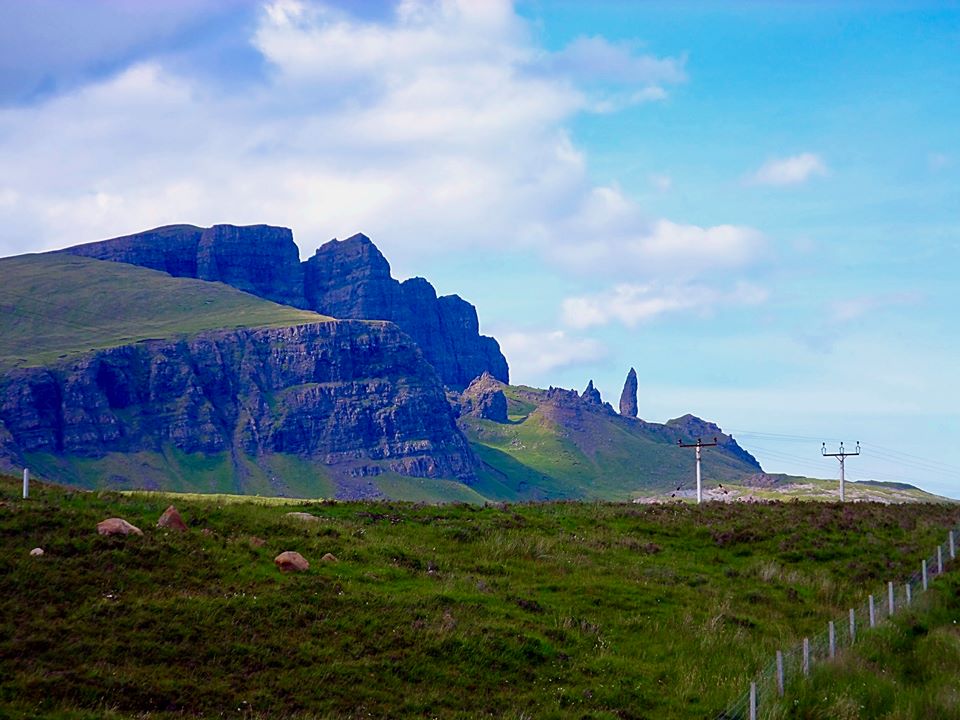
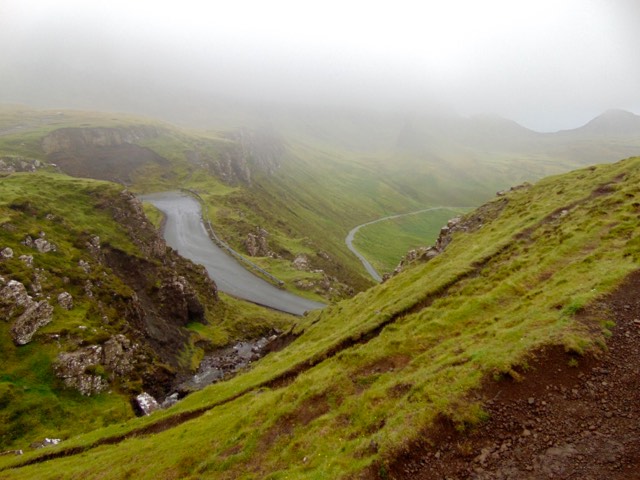
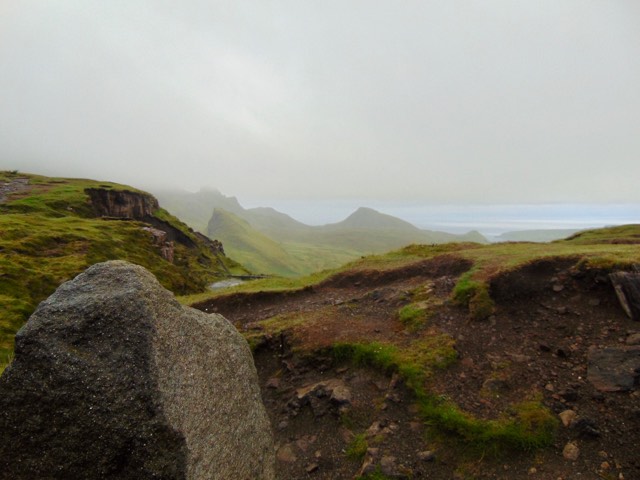
The Quiraing is on the northern Trotternish Peninsula and was formed in the ancient landslide. The walk across the Quairaing over a narrow path, up and down some steep hills, takes around 2 hours and, at its longest, is around 7km long inlcuding its highest peak. On a clear day, there are spectacular views over the Outer Hebrides.
Although most of the Trotternish Peninsula has stabilised since the ancient landslide, The Quiraing still moves 2-3 cm per year, damaging the local road. Along the Quiraing, footprints of the Hadrosaur Dinosaur have been found, along with fossils dating back 170 million years.
The name Quiraing, like the Storr, is Norse, and means round fold, or hidden valleys. In the hidden valleys, the locals would hide their cattle, safeguarding them against any attack from the Vikiings.
Its said that some of the rock formations were actually once people, and through magic, were turned to stone. Prince Storr and Princess Catriona were said to be just 2 of the people turned to stone.
The fairy people of the island would meet at The Table Plateau in the Quiraing. If, during the summer, and on a full moon, you happen to come across the fairies, it is said it would not end well for you.
Another legend tells of dragons hiding in the valleys, protecting the island from invaders.
DUNVEGAN CASTLE
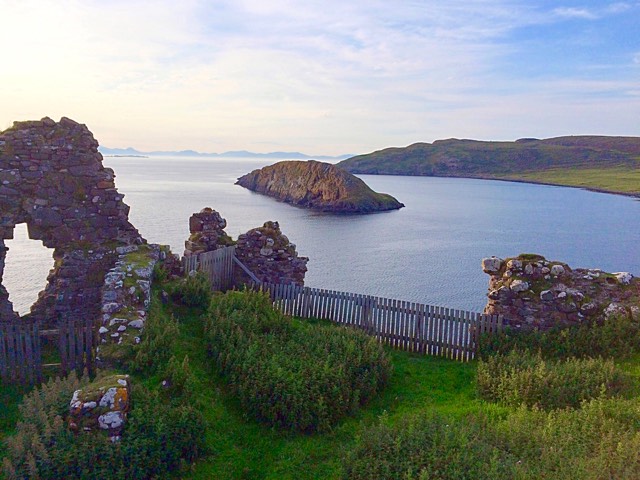
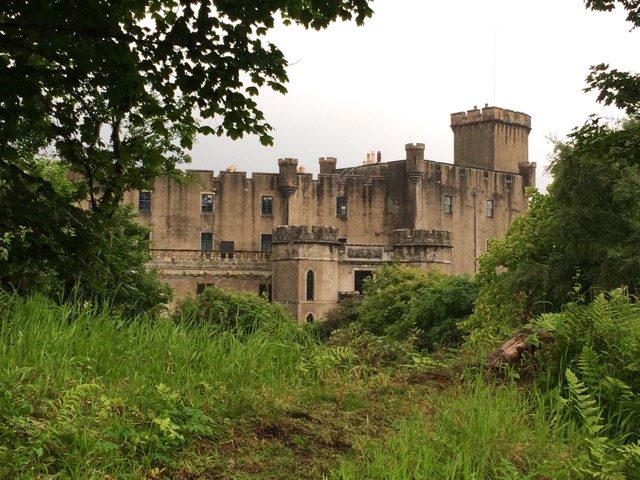
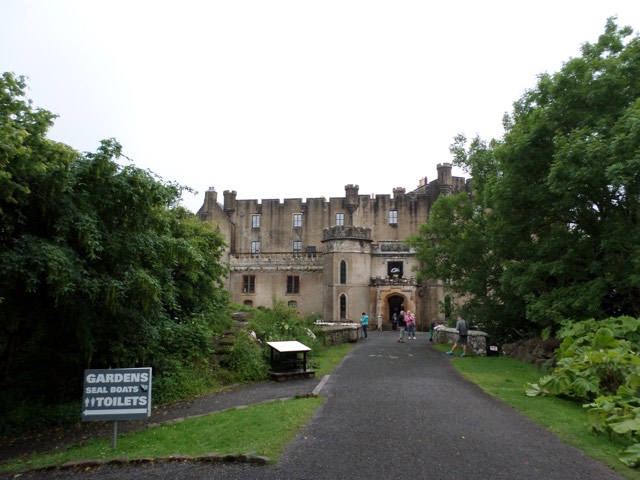
The castle was first built in the 13th century, but was then remodelled in the 19th century. The castle is one of the oldest in Scotland that is still inhabited. Dunvegan Castle is the seat of the Chief of the Clan MacLeod, and is currently occupied by the 30th Chief, Hugh Magnus Macleod.
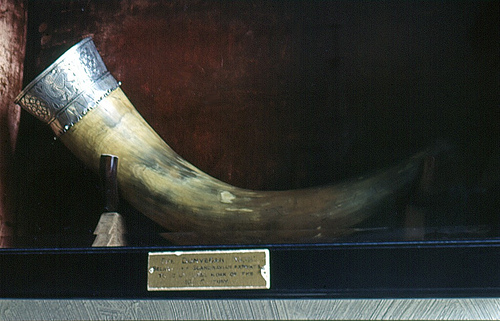
On display insde the castle is Sir Rory Mor’s Horn. The MacLeod custom is that with every new chief, he must fill the horn with wine and drink it to prove his manhood.
Also on display inside the castle is The Fairy Flag. Its said that a Chief of the MacLeod’s fell in love with a fairy princess. Although she did marry the Chief, she had promised her father she would reutn to the fairy land. The fairy and her husband said their goodbyes at the Fairy Bridge. She made the Chief promise never to allow their young son to cry. During a large feast, the maid left the child alone in the bedroom, he awoke, scared and alone, and started to cry. When the maid returned, she saw a lady holding the baby, wrapping him a shawl. The women then vanished. When the boy grew up, he would tell his father that the shawl had magical powers and could be used 3 times.
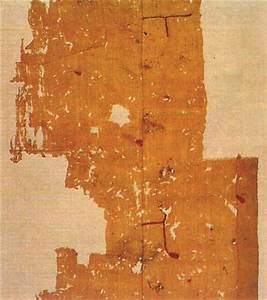
Its said that the flag has been twice. The first time it was used to help the MacLeod’s in a battle against their enemies, the MacDonald’s, once the flag was shown, the MacLeod’s started to overpower the MacDonald’s, and were victorious. The second time the flag was used was during a threat of stavation when the MacLeod’s cattle became ill and were dying. The flag was waved, the illness went, and the herd started to flourish. It’ has also been said that just by thinking about the flag it can provide protection. Local men who were in the war would think about the flag, or look at photographs in the hope that they would not be killed.
BY KAREN BARRETT
 Project Paranormal